IPhone Alarm Donates Money to Charity Every Time You Hit Snooze

August 26, 2011 in Daily Bulletin

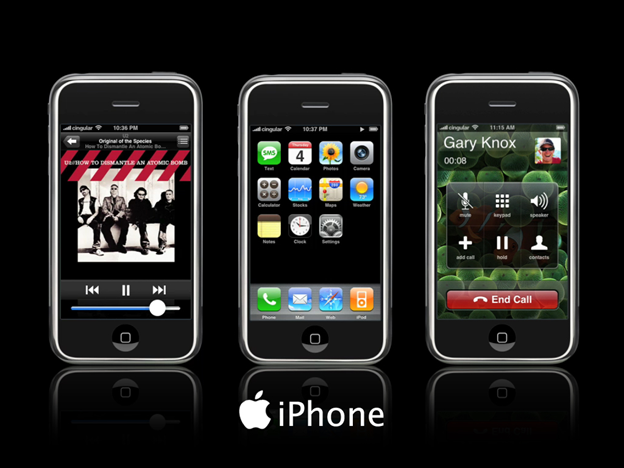
LetGive, a company that fuses together mobile technology and charitable activities has released an app for the iPhone, iPad and iPod Touch that pledges $0.25 to charity every time you hit snooze on your alarm. It’s an excellent way to use economic incentives to help you get out of bed in the morning. You can find it over here.

Source: LetGive

Via: Mashable, Freakonomics

Should A Person’s Income Be Made Public Knowledge?

August 25, 2011 in Daily Bulletin

Should all employee wages be made public? Daniel Indiviglio at The Atlantic considered some of the issues involved.

  • Salary transparency in some groups but not others might lead to greater income inequality. The rationale is that those that have perfect information about each other’s income compare themselves to each other and expect salaries that are higher than their peers.
  • Pay transparency might also encourage those who make lower than average salaries to go out and search for better jobs.
  • Salary transparency might not always be legal.

To read more about internet solutions to the problem as well as California’s experience with full income disclosure laws click here.

Source: The Atlantic

Via: Marginal Revolution

Hide the Gold!

August 24, 2011 in Daily Bulletin

As the price of gold continues to climb higher and higher (as investors continue to seek safety from the markets), it is having the effect of increasing crimes targeted at acquiring gold. This is a somewhat predictable development as thieves are obviously drawn to things of value and as the value of one thing rises, it can usually be expected that thieves will begin to target it more. Already, 110 instances of gold chains being stolen have been reported in one part of Los Angeles. Oakland has reported similar behavior. In addition, jewelry shops have experienced an increased number of break-ins in L.A. This trend hasn’t only been experienced in the U.S. either. Iraq also had some high profile gold heists and gold miners in Guyana have been killed as well. Will these kinds of crimes decrease when gold loses some of its value? Or will the price of gold just keep setting new records? Obviously, we can hope that these crimes will come to an end, but in the meantime, it may be a good idea to keep that gold in a safe place!

Source: Freakonomics Blog

The Future of Television

August 23, 2011 in Daily Bulletin

It appears that the old business model for quality TV shows is coming to an end. As the article notes, there was a time when network television dominated and had the highest quality programing. However, the times changed and the pay-TV model took over. This model, known as cable, gave rise to some of the most popular shows on television such as “The Sopranos” on HBO. However, this model is now appearing outdated with the advent of Hulu, Netflix, Amazon and the many places people go to on the internet to watch their favorite shows. So what may happen in the future? What will these companies have to do to continue making money to pay for quality TV shows? The answer to that question is unclear, but it may include individual channels marketing themselves rather than relying on cable distribution companies doing this for them. Viewers want more control and options over what they watch and how companies respond to this could be very interesting.

Source: The Economist

Time Management: What Are People Doing With Extra Free Time?

August 22, 2011 in Daily Bulletin

During the past recession, many people worked less hours due to either unemployment or underemployment. So what did they do with that extra free time? Well, it appears that they used it mostly for leisure activities. It was allocated to sleeping more than anything (20%). Other leisure activities was a close second (15%) and watching TV was also near the top of the list (12%). There were also some interesting differences between men and women. Men spent 19% of their extra free time watching TV while women only spent 13% of their time doing so. Women also spent more time catching up on sleep than men (24% to 12%).

Source: Freakonomics Blog

Psychologists Discuss Ways to Negotiate a Higher Salary

August 21, 2011 in Daily Bulletin

PsyBlog recently published ten tips to negotiate a higher salary. They include:

  • Negotiate for something higher, no matter what the initial offer is.
  • Humour can be an effective negotiation tactic.
  • Persuade, Assert, Misrepresent and Threaten
  • Compromise and Accommodation don’t work.

Click here to read more about the research supporting each of the tips described above, as well as the full list of strategies that you can use to increase your salary during your job interview.

Source: PsyBlog

Via: Life Inc.

Abercrombie and Fitch Begs Jersey Shore Cast to Stop Wearing Their Merchandise, Offers Them Money

August 20, 2011 in Daily Bulletin

It’s pretty common for fashion retailers to give money to models if they’ll take off their clothes so that they can be photographed in various states of undress with the purpose of producing alluring advertisements for shop windows and billboards. But in a twist that goes against this familiar script and the traditional rules of product placement, Abercrombie & Fitch offered to pay money to the cast from Jersey Shore if they promised to take off their Abercrombie & Fitch threads, with the guarantee that they’ll never put them on again. Apparently senior management was worried that the cast “could cause significant damage” to the brand’s “aspirational nature”. Viacom dismissed it as a PR stunt. Abercrombie and Fitch’s shares fell by 8.7% soon after, although analysts attributed this to comments made by senior management about the company entering a period of uncertainty.

Source: Reuters

Are Narcissists Good Leaders?

August 19, 2011 in Daily Bulletin

In a recent study, the leadership ability of narcissists was tested. It has often been thought that narcissists make good leaders due to their self-confidence. However, in the study, it was shown that groups led by narcissists often made poor choices (in the case of this study, the choice was in deciding who to hire). These groups also were shown to share less information with each other. However, the study also showed that the narcissistic leaders were rated more highly by their group members than the leaders who were not narcissists. Thus, the study shows that while narcissists appear to be good leaders to those around them, they actually are not.

Source: Freakonomics Blog

Is It Worth Attending a Selective High School?

August 18, 2011 in Daily Bulletin

A professor of economics at Harvard researched the benefits of attending a selective high school in New York City. The three high schools he took data from were Stuyvesant, Brooklyn Technical, and Bronx High School of Science. However, he found that attending one of these schools actually had a negative impact on students. Students attending one of these schools actually faced worse graduation and college enrollment statistics than similar students at other schools. The impact on their SAT scores was also found to be minimal. However, marginal students were helped by attending one of these schools as they were pushed to take more rigorous courses than they likely otherwise would have taken.

Source: ArtsBeat Blog

Via: Economix Blog

The Most Dangerous Job Ever

August 17, 2011 in Daily Bulletin

A new study has apparently proven that being a king is the most dangerous occupation of all time. Manuel Eisner, a professor at Cambridge, researched the deaths of over 1,500 monarchs between 600 and 1800 AD. He found that almost 25% of them died violently during this time, and almost 15% of them died from being murdered. Their risk of dying violently was about 700 times greater than those they ruled, and was also greater than the risk facing those living in even the most dangerous places on earth today.

Source: guardian.co.uk

Via: Freakonomics Blog