Strong Correlation between Skyscrapers and Financial Crashes

January 12, 2012 in Daily Bulletin, Signature
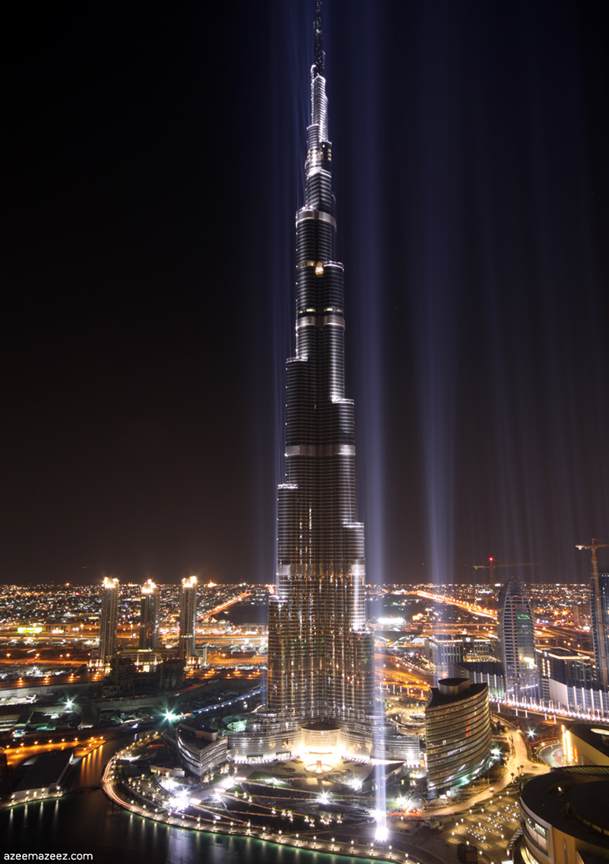
Researchers at Barclays have found a strong relationship between the building of skyscrapers and the incidence of subsequent financial crashes. The BBC reports that:

  • Examples of this phenomenon include: The Empire State Building which was built around the time of the Great Depression; Dubai’s Burj Khalifa built as the country almost went bust; The first skyscraper in history: The Equitable Life Building built in 1873 and demolished 39 years later; The Sears Tower and an oil shock; Malaysia’s Petronas Towers and the Asian Financial Crisis.
  • Next up on the danger list are China which is currently the biggest builder of skyscrapers, and India which is building 14 of them. London is also currently constructing The Shard, a skyscraper that will be the tallest in Western Europe.
  • Analysts at Barclays argue that the reason for this phenomenon is that: “Often the world’s tallest buildings are simply the edifice of a broader skyscraper building boom, reflecting a widespread misallocation of capital and an impending economic correction”

Read more about what this could mean for the future of China as well as other developing countries over here.

Source: The BBC

Predicting the Weather

January 11, 2012 in Editorial, Top

During these crazy months of winter, weather websites will be visited so that people can plan their days accordingly. With so many websites to choose from, it is hard to decide which to look at on any given day. But do all of these sites agree on a specific weather prediction? Do some predict worse weather than others?

Centives looked at different and well-known weather websites to see if they tended to agree or disagree on the weather for the month of November. Three were considered (AccuWeather, The Weather Channel, and Weather Underground), but Weather Underground only gave a range of possible temperatures, so we did not use this site in our first analysis. Both of the other sites were programed to give the weather in Bethlehem, Pennsylvania. In 9 out of the 30 days in November, AccuWeather and The Weather Channel predicted Read the rest of this entry →

Sex, Bombs and Burgers

January 10, 2012 in Daily Bulletin

Peter Nowak recently published a book called “Sex, Bombs, and Burgers” that took a look at how the basic human desire to reproduce, destroy, and eat has driven the technological revolution. Salon

sat down with Nowak to interview him. Some of the interesting points from the interview include:

  • Military research into how to move and sustain troops across vast expanses of land and sea made possible the technology that created powderized food and made restaurants such as McDonalds possible
  • Silly Putty was designed to be a replacement for rubber during World War 2 because the Americans and the Japanese were fighting over rubber producing regions
  • The reason why porn companies immediately embrace new technologies and helped to drive the internet video revolution forward is because government regulators are afraid to regulate new technologies because they don’t want to scare away investors
  • Contemporary products that have roots in the military include: Google Maps, Google Earth, Google Translate and Siri
  • For all these reasons and more Nowak calls World War 2 the most technologically important event in human history

Click here to read more excerpts from the interview and see how everything from Skype to Barbie was made possible by the deepest human instincts.

Source: Salon

The Worth of a Smile

January 9, 2012 in Daily Bulletin

Researchers at Bangor University found a way to value a smile. Some key results of their analysis include:

  • Each smile is worth 1/3rd of a penny, meaning that three smiles will net you one British penny
  • However this is only the case if the smiles are genuine. Non-genuine smiles are worth nothing
  • Genuine smiles during times of misery are not appreciated

To read the fascinating research methodology the researchers used to come to their conclusions as well as the potential implications that this has for bankers and waiters click here.

Source: The Guardian

Via: Sean Goodwin

China: No Country for Old Men?

January 8, 2012 in Daily Bulletin

Bloomberg recently reported on the ageing problem in China noting that:

  • The latest government census shows 178 million people over 60. By 2050 the UN forecasts that up to 437 million will be – a third of China’s population.
  • This is a challenge that Japan also had to face in the 1990s. The difference is that Japan had the opportunity to deal with it after it got rich. On a per capita basis the Chinese are still relatively poor.
  • The government still expects families to provide for the old but after decades of a One Child policy this is becoming increasingly difficult for them to do.

To read more about the contrasts between some of the facilities available for the elderly as well as the experiences of individual senior citizens in China click here.

Source: Bloomberg

What Must a Company do to make a Successful Smartphone?

January 7, 2012 in Daily Bulletin

WebOS, the smartphone operating system currently owned by HP and developed by the now defunct Palm, has a fascinating history that involves more twists and turns than a Dan Brown novel. You can review some of the history here. Michael Mace on his blog MobileOpportunity took a look at why WebOS ultimately failed. He outlines a two-step argument.

1) New operating systems always suck.

Operating systems are incredibly complex and always require the software engineers working on them to make several compromises to ensure that the software can ship on time. He notes that: “every new operating system, without exception, is an embarrassing set of compromises that frustrates its creators and does not deliver on the full promise of its vision. ” He points to the original Macintoshes inability to create word processing documents longer than 10 pages as an example of this.

And so the operating systems that succeed are those that survive long enough to be fixed.

2) The way to ensure that your software survives is to have deep pockets and compelling features. WebOS had neither of these things.

Because the first version of your software will be a disappointment you must have the financial capability to slowly refine your product over time until it realizes its full potential. It helps if your software can do something that no other software can because that will guarantee customer loyalty as the software is upgraded. As an example he notes that the original iPhone had various flaws but it succeeded because it did something that no other smartphone could do: make web browsing work well on a phone. WebOS failed on both counts.

The two companies aiming to rebrand themselves and overthrow the dominance of iPhone and Android are Nokia’s Windows Phone and RIM’s BlackBerry. Looking ahead he asks two questions of any company that wants to create a new smartphone platform. Does it have the deep pockets necessary to refine the product over time? And does it have killer features that make it a product worth getting? Only Nokia seems to be able to answer ‘yes’ to the first question and neither Nokia nor RIM have begun to address the second.

To read more about what Mace thinks went wrong for HP, click here.

Source: MobileOpportunity

Trade among States Engaged in a World War

January 6, 2012 in Daily Bulletin, Signature

Marginal Revolutiontalks about an interesting phenomenon during World War 1. The British War Effort had a shortage of binoculars and so placed an order for several thousand of them from the leading manufacturer of the time, Germany, who was aware that they were being used for militarily purposes. The Germans told the British that if they wanted to find a catalogue of the kind of binoculars Germany would be able to supply Great Britain, they simply had to examine the equipment of German soldiers that The British had captured. On the other hand when the Germans had a shortage of rubber for their war effort the British delivered it to them in Switzerland.

Why did these belligerents help each other out in their efforts to annihilate one another? Marginal Revolution suggests four theories:

  • Because it was a two front war for Germany, the British believed that the Russians would bear the brunt of the cost of aid to the German war machine.
  • Commercial interests in the two countries drove the deal forward
  • Politicians did it to appeal to military lobbies
  • They were mutually beneficial transactions because the two sides disagreed about what the goods were worth. This happens on Wall Street every day.

To read a wider discussion about the issues involved, and to contribute your own theories you can click here, or suggest something in the comments below.

Source: Marginal Revolution.

Why Do Theaters Charge the Same Prices for Different Films?

January 5, 2012 in Daily Bulletin

Why does a movie ticket for the summer’s biggest blockbusters and the smallest independent flick cost the same at the theater? Derek Thompson at The Atlantic offers four theories:

  • If movie theaters were known to cut prices a few weeks after the film hit the screens then customers would have an incentive to hold off on watching a movie for a few weeks. Therefore theaters avoid cutting the price of movie tickets for any one film over time.
  • Price is also a signal of quality. If you saw that one movie cost less than another, you might wonder about the cheaper film’s quality and avoid watching it.
  • If different movies had different prices then movie-goers may sneak into a more expensive screening after purchasing a ticket for a cheaper film.
  • Theaters don’t want to get into a price war with one another

To read more about how the economics of the movie theater have changed since 1929 as well as other interesting facts and opinions click here.

Source: The Atlantic

Via: Marginal Revolution


The Economics of Sesame Street

January 4, 2012 in Daily Bulletin

Slate recently took a look at the financials of Sesame Street. Some of the interesting findings in the article include:

  • Each Sesame Street episode costs about $630,000 to make
  • Sesame Workshop, the creators of Sesame Street, declared revenues of $136.366 million, and expenses of $136.496 million in 2010. This means that Elmo and friends suffered a net loss of around $130,000
  • The company also paid $7 million for what it terms “Muppet Acquisition”

To find out what proportion of Sesame Street’s revenue comes from licensing, what one Presidential contender has to say about the show and other fun facts about the beloved children’s TV series, click here.

Source: Slate

Dexter: Serial Killer or Fiscal Miracle?

December 28, 2011 in Editorial

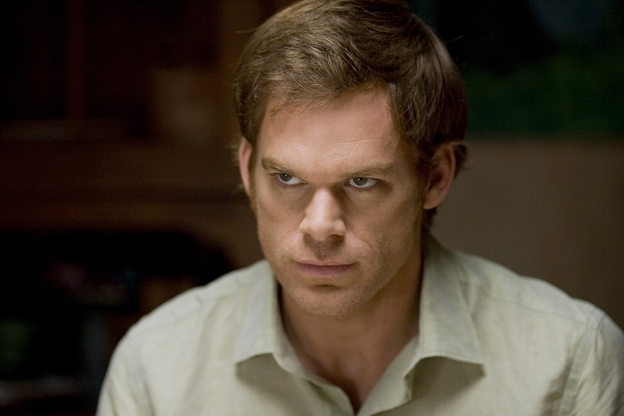
It has seized on a deep seated fear in American culture and triumphed in ratings and critical reviews: Dexter, the show about a serial killer whose targets are well… other serial killers. Dexter Morgan, the main character and lab geek working for Miami metro homicide is played by actor Michael C. Hall and throughout the series happens upon more than his fair share of fellow serial killers. He not only has a knack for jiu-jitsu but also an uncanny ability to recognize his fellow killers. It seems a bit strange that there are so many serial killers in Miami for Dexter to find, especially since the FBI estimates that there are probably only about 100 serial killers active in the entire US at any one time (and that is on the high end). Even so, it is interesting to note that Dexter performs some kind of service to the city of Miami when he disposes of these serial killers. Regardless of the moral implications of his actions, he undoubtedly saves money for the Miami police department and federal government by removing his peers. Assuming all of these individuals would actually be pursued by police investigators, vast resources would need to be utilized in labor costs alone. For instance, 13 people were killed by Dexter in the first season alone.

Centives investigated the cost of attempting to catch a large-scale serial killer located in a major US city and found it to be around 265,000 dollars per day in current dollars. In order to determine the approximate savings realized through a lack of inquiry into Dexter’s victims, Centives estimates that about half of the serial killers would eventually be investigated. Son of Sam, a notorious serial killer in New York, was investigated for about a year before he was caught, and so this was a benchmark for our timeframe for each investigation. With these numbers, in just one season of Dexter, 7 serial killers would be investigated for about a year each at a cost of 265,000 dollars a day. This would yield a result of a staggering 677 million dollars. Because, many resources would overlap, this number should be reduced somewhat, so our final estimate is about 500 million dollars. Off hand, this number seems very high, but keep in mind, the odds of 7 serial killers being investigated in one city in this short of a time is extremely low. If however we assume there is just one major investigation in this span of time, Dexter saves the government 96 million dollars. Whether he is good or evil, one thing is for certain, Dexter is good for the police budget.