Cocoa Bean Counters

July 24, 2012 in Daily Bulletin, Signature

Leslie Josephs delved into the world of cocoa bean graders:

  • Cocoa beans are a big business. They’re key to chocolate and there’s an $8 billion market for them.
  • The IntercontinentalExchange on which they are traded needs them to be graded. There are currently 24 certified graders but the numbers may soon dwindle due to retirement.
  • It’s four times harder to pass the certification exam to become a cocoa bean grader, than it is to pass the New York State Bar exam.
  • Yet the graders are rarely called upon. They earn $21 for examining a 10-ton shipment, for about $350 a session. They only work as bean graders 50 days a year.
  • Just by examining it, graders have to be able to identify which country the beans came from, how they were dried, and identify any odors they may have absorbed.

To read more including comments from those who had to take the tests multiple times, why it makes a difference if the beans are dried over a fire, the lengths that some go to, to identify the beans, how Ecuadorian and Nigerian beans differ, and the odd case of a bullet shell among the beans, click here.

Source: Yahoo Finance

Via: Marginal Revolution

21st Century Spies

July 24, 2012 in Daily Bulletin

When Anna Chapman, the red-headed Russian spy, was caught in the United States, people derided Russia for planting an agent in suburbia. These people don’t understand how spies work in reality writes Edward Lucas:

  • Spies have to be boring. If they want to transport secret documents then they need to build careers where they get to travel.
  • If on the other hand they want to recruit agents, then they need jobs where they can meet lots of people without drawing suspicion.
  • These spies are almost impossible to detect. They can’t be rooted out precisely because they’re so boring.
  • Spies like Chapman build boring histories for themselves so that they can be considered for employment in places where they might have access to secrets.

The full article is here, and discusses many other things including the evolution of spies in the Soviet Union and Russia – the role they play in society, the rules they play by, what their lifestyle is like, how they exploit America’s strengths, the author’s own history, and the time when Putin was rejected from the KGB.

Source: Foreign Policy

How Movie Studios Are Increasing Profits

July 23, 2012 in Daily Bulletin

On the one hand you hear that piracy is killing the movie industry and that movie attendance is plummeting, yet on the other you hear that Disney made record profits in fiscal 2012. How is this possible? Edward Jay Epstein explained:

  • Television series have become a cash generator. One executive estimated that 85% of profits come from cable television series.
  • These TV shows and movies are then licensed to online providers. The competition between Netflix, Amazon and Hulu has caused licensing fees to rise – especially since they pay a premium for exclusive access to the media.
  • Theater attendance might be plummeting in the states but it’s rising in other countries. Movie studios have raised prices there to increase revenues.
  • Stars will often earn a lot less than their contracts suggest that they do.

To read more including how movie stars game the system, and why they do it, as well as why online licensing fees are so lucrative, the Video-on-Demand bonanza, the role that 3D plays, and the $20 billion network, click here.

Source: The Hollywood Economist

Via: Newmark’s Door

The Strongest People In The World

July 23, 2012 in Daily Bulletin

Burkhard Bilger delved into the world of strong-man competitions and met the strongest people in the world:

  • Strongman events aren’t like weight lifting events. You do everyday tasks like lift logs or carry rocks.
  • The performance improvements in recent times have been stunning. In 1953 the first 500 pound bench press was done. These days it’s around 1,000.
  • Americans no longer do well in Olympic weight lifting events. Strongmen events have since become the proving grounds for America’s strongest people.
  • Diet is important. Before competitions they’ll eliminate liquids and salts to remove the water underneath their skin – giving them an advantage.
  • Fat helps to insulate them from the physical stresses to their body. They force themselves to eat far beyond the point of hunger. A typical breakfast can include ten eggs, and three pounds of bacon. Throughout the day they periodically drink 1,200 calorie shakes.
  • It’s not just muscle mass. Power depends on how quickly you can use that strength. The most powerful have muscle fibers that are synchronized and react quickly.
  • Despite all the blood they shed and the punishment their bodies go through, the money is uninspiring. Most competitions yield around $4,000 for the winner. The most competitive ones go up to $55,000.

It’s an article from The New Yorker which means that the summary provided here can’t possible do it justice. It’s long, interesting, and informative. Some of the many, many, (many) things you’ll find include the physical punishment that the participants endure, the spectre of drug abuse, the role that yoga plays, and how it relates to Arnold Schwarzenegger, when you click here.

Source: The New Yorker

Via: Marginal Revolution

A Market Created By Presidential Campaigns

July 22, 2012 in Daily Bulletin, Signature

Alana Semuels outlined a market that gets a boost every time a Presidential election roles around: the demand for candidate impersonators:

  • There is a lot of competition in the candidate impersonation business because the profits are so lucrative. Reggie Brown, an Obama impersonator (pictured above) makes tens of thousands per appearance.
  • It’s not just the looks that are important. The voice matters too. People who can mimic the voice of the candidate are more successful since they can always use prosthetics to alter their appearance.
  • Aspiring impersonators closely scrutinize their candidate’s media appearances. A Wishful Romney lookalike notices everything from his posture to the smirk he has during debates.

To read more including the life of an impersonator, why they do it, the people who are likely to hire the impersonators, what happens when you put two impersonators together, the role that YouTube plays, and what the founder of the Celebrity Lookalikes Convention has to say, click here.

Source: LA Times

Via: Marginal Revolution

The Self-Defeating Nature Of War?

July 22, 2012 in Daily Bulletin

Iran’s parliament will soon vote on a bill blocking the Strait of Hormuz, through which 40% of seaborne oil passes. Doing so would ultimately hurt Iran writes Gal Luft:

  • The cost of completely closing off the Strait would likely be prohibitive – even at its narrowest point the area is too large.
  • The bigger problem for Iran though is that in response to threats to shut off the Strait, other countries have begun building oil pipelines that bypass Iran entirely.
  • Since Iran’s diplomatic clout stems from the importance of the Straits and their close proximity to it, if the Straits no longer remain key to the international system, then Iran too will cease to become important.
  • This has happened before. During the Italo-Turkish war the Turks cut off access to the Straits. This eventually contributed to the Ottoman Empire’s own demise.

To read more including why the Turks closed the Strait a century ago – and why it was eventually their undoing, why it probably won’t require another World War to cease to make Iran relevant, the steps that have already been taken to build pipelines, why Iran’s plummeting economy is important, and what oil markets think about the likelihood of the Straits being shut, click here.

Source: Foreign Policy

Have All The Records Been Set?

July 21, 2012 in Daily Bulletin


It’s possible that we’re approaching the limits of human achievement writes Peter Keating. Highlights include:

  • Around 1993 performers in the majority of track and field events seemed to hit their plateau, being unable to improve on those performances.
  • At this rate we’ll have reached the human limit in most sports by 2027.
  • This is odd because over time performance should increase – since the number of people does.
  • This is in part due to a dearth of innovation. It’s not just the human body that gets tested during The Olympics. Clothing, diet, chemicals and training all affect performance.
  • It is theoretically possible, for example, for Usain Bolt to beat his 100-meter record. According to an expert if he got off the block quicker, ran at a 1,000 meter altitude, and had a strong tailwind he could make the 100 meter run in 9.44 seconds (rather than the current 9.58).
  • Innovation has been halted by society. We don’t accept things like full-body swimsuits that helped peak times improve in the early 2000s while they were legal. Or drugs.

To read more including how Michael Phelps demonstrates the problem, what the experts have to say, the innovation in high jumping, the role that the Soviet Union played, and how current records will ultimately be broken, click here.

Source: ESPN

Via: Marginal Revolution

The Economics Of The Syrian Opposition

July 21, 2012 in Daily Bulletin

C. J. Chivers had the numbers related to what the economics of being a warrior fighting to overthrow the Syrian government were like:

  • The price of weapons have soared. It’s not possible to get a modern rifle for less than $2,000 and a PK machine gun can cost as much as $7,000 on the black market.
  • Ammunition is a constraining factor. It costs ~$2 per rifle round and guns such as the American M-16 are used as sticks because ammunition for them isn’t widely available.
  • As the rebels make gains it is likely that prices will drop. They will have the opportunity to take the weapons of the government’s soldiers.
  • Something similar happened in Libya where the rebels initially had to run into battle unarmed, planning to pick up the rifle of a fallen comrade because buying one’s own was too expensive. However as the rebels gained ground prices dropped.

To read more including how much it costs to arm three riflemen, a machine gunner, and a man with a rocket-propelled grenade (not counting ammunition), what rebels complain about, which weapons are successful, some more prices for various weapons, why the rebels don’t want the country to be like Somalia, and what will happen once the fighting stops, click here.

Source: New York Times

Via: Marginal Revolution

Why Is Summer Sexy?

July 20, 2012 in Daily Bulletin

There’s a heatwave sweeping the United States which got J. Bryan Lowder wondering why summer weather and sweat dripping off bodies is so closely associated with sexiness. Highlights include:

  • Estimates suggest that summer does not uniformly lead to more sex. People living in cooler climates seem to prefer it in the summer though.
  • Sweat helps to spread our natural scent potentially attracting mates.
  • People expose more skin and spend more time outdoors with other people during the summer – creating more opportunities for sexual encounters.
  • We conflate our vocabulary and our perceptions. Warmth is associated with intimacy which may lead people to be more…intimate with one another.

To read more including how sex affects sperm production, the role that pheromones play, what Trojan’s “Degrees of Please” survey tells us, nudity in the winter, how visual attraction defers between men and women, and links to several studies where you can learn more, click here.

Source: Slate

Fire Fighters No Longer Fight Fires?

July 20, 2012 in Daily Bulletin

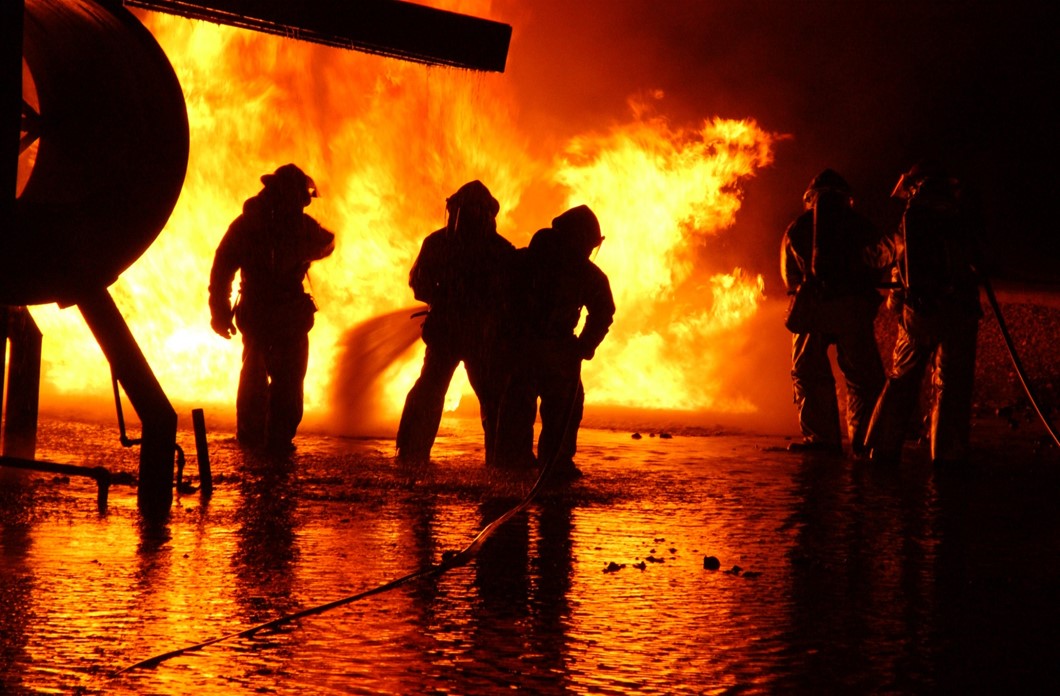
Alex Tabarrok has a fascinating article where he looks at the evolution of fire-fighters in America. Highlights include:

  • In the past 35 years the number of fires have rapidly declined while the number of firefighters have even more rapidly increased.
  • Every time a fire truck is called it costs around $3,500 – and 25 calls in 24 hours is not uncommon.
  • The number of false alarms has doubled.
  • To give firefighters something to do they’re increasingly involved in activities such as responding to medical emergencies, dealing with gang violence, and even teaching.

To read more including many more details, several informative and fascinating graphs, the state of volunteer firefighters in the United States, why it’s hard to negotiate with firefighters, how Washington State is changing how it does things, what else firefighters do with their down time, why you can’t just have them lounging about, and the role of unions, click here.

Source: Marginal Revolution