Learning Business By Creating A Business

August 3, 2012 in Daily Bulletin

Hannah Seligson reported on a new initiative to teach entrepreneurship:

  • Founder Institute requires students to have incorporated their own business in order to graduate.
  • The tuition is only $1,000 but the Institute takes a 3.5% stake in the company that is founded.
  • The program is so tough that 60% of students fail to graduate.
  • Of those that do, 42% have received external funding within the first six months of their businesses’ operation, while 10% have failed.
  • Founder Institute has chapters in 14 countries and courses are altered to fit the local market. In Singapore, for example, there is a session on doing business in China.
  • Overall the institute claims that it has helped to found more than 500 companies.

To read the testimonials of people who have been through the program, some of the mistakes they were making, the story of the man who founded the Institute, how it compares to getting an MBA, the ownership structure of the institute, what it means to take the program part-time, what you have to do to get admission, and what experts have to say, click here.

Source: The New York Times

Via: Marginal Revolution

The Future Of Medicine

August 3, 2012 in Daily Bulletin

In the future, writes Tim Adams, you may just be able to “print” out your own drugs and medicines when you need them. Highlights of his report include:

  • The majority of drugs are made out of some combination of carbon, hydrogen, oxygen and common agents such as oils.
  • 3-D printers could put together these base elements in the right way to produce the drugs you need.
  • Lee Cronin, a project researcher, believes that once the devices become widespread it would be akin to having an app store for medicines.
  • A lot of counterfeit drugs available today are of low quality. Such a machine would eliminate that problem since you could potentially purchase licensed chemical blueprints.
  • There are also several drugs that have been researched but aren’t produced because they’re too expensive. By democratizing medicine-manufacture you could bring immediate economies of scale.
  • You would also only produce drugs when you needed tem and wouldn’t have to worry about getting them in advance.
  • NATO has shown some interest – having a complete medical kit for battlefield soldiers would be valuable.

To read more including the genesis of the idea, current prototypes, a more technical explanation of how the machine works, why he doesn’t think the pharmaceutical industry would oppose it, what the future even beyond this machine might look like, the research funds that are available, and what industry experts have to say about it, click here.

Source: The Guardian

Via: Marginal Revolution

The Cost Of Free

August 2, 2012 in Daily Bulletin, Signature

We get a lot of things for free on the internet these days. For their own sake companies better not dare charge money for them writes Chana Joffe-Walt:

  • US Veterans don’t like the Red Cross because during World War 2 the Red Cross would offer free coffee and donuts but soon began to charge for them.
  • They only started to charge for them because their British allies had to pay for the same things, and this was creating tensions.
  • The change didn’t last long – the Red Cross soon went back to giving donuts away for free. But veterans continue to harbour feelings of resentment.
  • The problem wasn’t the price – it was that the positive image that the Red Cross had built was ruined. The resentment stemmed from disappointment.
  • Companies that try to charge for products presently given away for free might face a similar backlash – even if the prices were reasonable.

To read more including the economist that discovered the phenomenon, what an archivist for the Red Cross has to say about it, the role of categorical change, and a wider transcript of an interview, click here.

Source: NPR

Via: Freakonomics

The Economics Of Cremation

August 2, 2012 in Daily Bulletin

A crematorium in England is implementing a system that will allow it to harvest energy from the cremation of people, and then sell that energy back to the grid writes Natalie Wolchover. Highlights:

  • A typical turbine system costs between $250,000 and $500,000.
  • A single cremation can create enough energy to power 1,500 televisions for an hour.
  • In Europe burners run 24 hours a day. This means that the turbine system should pay back its cost in five years.
  • In the US where burials are more common, crematoriums only run eight hours a day meaning that it could take 20 years to pay back the cost.
  • This means the system is unlikely to come to the US soon – but as the baby-boomers begin to die it might become economically feasible to install such systems in the states.

You can find other details including precisely how much energy each cremation can generate, how it is a green technology, why it’s not just the popularity of cremation in Europe that makes it an appealing business strategy, the future of cremation in America, the potential popularity of a cheaper turbine, and what industry insiders have to say, click here.

Source: MSNBC

Via: Freakonomics

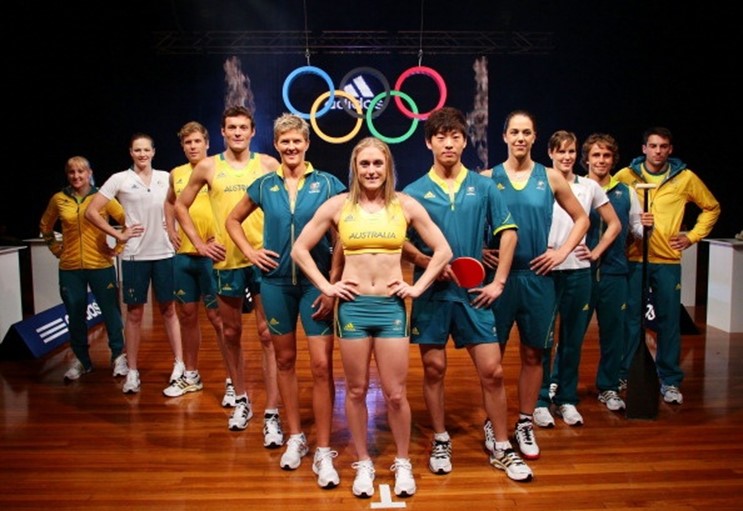
Sex And The Olympics

August 1, 2012 in Daily Bulletin, Signature

What happens when you put together thousands of the fittest athletes in the world, in the prime of their youth? Let’s just say that if the Olympics were held between Greek city-states today, the Trojans would have a lot to boast about. Sam Alipour reports:

  • In the 2000 Sydney games the 70,000 condoms available weren’t enough and an additional 20,000 had to be ordered. Now the standard is for 100,000 to be in place before the games begin.
  • One Olympian estimates that up to 75% of the athletes have sex in the Olympics village, which is off-limits to all but the competitors. “It’s like Vegas.”
  • Striking up conversations with people of the opposite sex is easy. You simply ask them what sport they play.
  • The Italians are the most promiscuous.
  • One athlete says she prefers swimmers, water polo players, and track-team runners.
  • Some have blamed sex for underperformance during the actual games. It can become such a distraction that some coaches enforce a curfew and ban cross-gender dorm visitations.
  • There are deeper issues involved. Training is intense and it’s difficult to meet new people. In the Olympic village athletes are suddenly put with a group of people who understand exactly what it’s like.
  • Part of the appeal is that you’re unlikely to see the same group of athletes ever again.

To find out why this is natural for Olympians who are all extremists, the challenges they set themselves, many choice quotes (including: “This time, when I’m done leaving my legacy on the track, I’ll make sure London remembers me.”), why the swimmers are lucky, the panties, bras and underwear that people walk around in, where the sex takes place, what happens if you can’t pick which one you want to be with, the cultural differences among the different nations, why it’s like college, what happens to the adolescent athletes, what a gold medal can get you, and the experiences of various Olympians click here.

Source: ESPN

The Modern Versus The Ancient Olympics

August 1, 2012 in Daily Bulletin

How would our athletes today have compared with the Olympic athletes from ancient Greece over two millennia ago? Brian Palmer found out:

  • The first of the modern Olympics took place in 1896 and the ancient Olympians might have had a chance then. They would at least have been in the running for a few medals.
  • However in the present our Olympians easily outshine the ancient Olympians. The discus record in ancient Greece was about 95 feet. The modern record is 243 feet.
  • The exception is the long-jump. Ancient Olympics record distances greater than 50 feet, almost double the modern record. However this might be because of differences in methodology and the classification of what constitutes a long-jump.
  • But the ancient Greeks had several things going against them which makes them difficult to compare to modern athletes:
    • They only trained for a few months before the games.
    • Dubious dietary supplements were used in attempts to boost performance.
    • The competitors had to walk 36 miles to get to Olympia, the home of the Olympics. This would mean that they were tired by the time they began to compete.
  • But perhaps the ancient Olympians would have found a way to even the playing field. They were not above cheating or crippling their opponents.

To read more including some ancient Olympic records, how they compare to modern ones, the differences in how distances were measured, how some of the events differed, one way that the Olympics hasn’t changed at all, ancient training regimes, strange diets, hexes on opponents, and some of the forms of cheating and maiming that were prevalent, click here.

Source: Slate

Are America’s Latest Military Developments Misguided?

July 31, 2012 in Daily Bulletin

America’s chief of naval operations has written a piece arguing that America’s military strategy is misguided reports The Economist:

  • Admiral Greenert argues that modern weapon systems are too specialized, and are designed to handle and execute specific tasks.
  • Yet these weapons systems were never designed for the counter-terrorism, anti-piracy, and maritime patrolling operations that the navy engages in today.
  • Older technologies such as the 50 year old USS Enterprise Aircraft Carrier or the 60 year old B-52 (which is now scheduled to operate through 2045) have been much more useful than modern systems because they’re so adaptable and can be used for a wide variety of missions.
  • Future weapons systems should build on the concept of adaptability. They should be more like trucks that can be loaded with various payloads or even have their configuration changed, rather than be like specialized and limited luxury cars.
  • It takes at least 15 years to bring a new vehicle from design to completion and in that time the technology that it is built upon becomes outdated. Even the latest equipment normally has less processing power than cheap consumer devices.
  • The focus on stealth technology is also a mistake. As computing power increases it’ll be easier to use algorithms to detect even the stealthiest planes.
  • Instead the military should focus on building weapons that have a longer range than the enemy’s weapons, so that the enemy can be destroyed before they can take any action. Jamming sensors and developing unmanned systems would also be wise.

The Economist has a much fuller outline of the argument over here. It includes information about how it relates to the F-35 project, why older weapon systems have been doing better, a Navy ship project that exemplifies the kind of platforms that Greenert believes that the American military needs, why stealth is misguided, what this might mean for the future of the navy, and what experts have to say about it.

Source: The Economist

The Most Resilient Olympic Records

July 31, 2012 in Daily Bulletin, Signature

World records will be broken over the next few days in London, but some of these records are more impressive than others writes Nate Silver:

  • Track and field events have the most resilient records. The men’s long jump Olympic record was set 40 years ago in Mexico City.
  • The women’s 100 meter dash Olympic record was set in 1988 and since then no other woman has come within 0.2 seconds of the mark.
  • In the Beijing Olympics only five world records were set in the 47 track and field games that took place. In swimming 25 records were set in just 34 events.
  • In fact, swimming times have fallen at around 10% a year for the past 40 years. The same can’t be said for track and field events.
  • The woman who won the shot-put Gold in 2008 would not have even made a bronze in 1976.
  • Part of the reason for the success of swimmers is that they have benefited from technology – better costumes, and deeper pools.
  • But most importantly you need access to a pool to become a swimmer and this is only widely available in some countries. In contrast anybody can become a runner. Runners are more likely to have hit the wall of human achievement since more people have tried it.

To read more about how this relates to baseball, which records to watch out for in the Olympics, why even Beijing was an anomaly, the statistical method developed by Silver, what Nike and Reebok would like you to believe, Gould’s hypothesis, and what we should expect in Rio in 2016, click here.

Source: The New York Times

Via: Marginal Revolution

How Does An Economic Crisis Affect Health?

July 30, 2012 in Daily Bulletin

With Greece on the edge of default and Spain and Italy not far behind, in addition to the perpetual fear about the implosion of China, we live in a world where the next economic crisis could happen any day. But how do these crises affect the health of the populace? The Economist reported on some research in the area:

  • In 2008 Iceland’s economy crashed, contracting by 15% of GDP.
  • This gave economists the chance to study what such economic contractions do to health.
  • Unhealthy behaviour fell – people stopped consuming alcohol, tobacco, sugary drinks and snacks. This is likely because a lot of these items are expensive, although the fact that McDonald’s closed down might have played a role.
  • However diets still got worse overall since Iceland has to import its fresh food and with the devaluation of the currency it became more expensive to do so.
  • In the end though people didn’t let their economic troubles keep them up all night – they slept more – and they also got married more.

To read more about the underlying economic principles behind each of these findings, the methodology of the study, the details of Iceland’s crisis, some of the other findings of the study, the researcher who got married, and to find out why economists are licking their lips, click here.

Source: The Economist

Fashion Magazines In China

July 30, 2012 in Daily Bulletin

Christine Haughney and Jonathan Landreth reported on China’s fashion magazine market:

  • Fashion magazines have become so popular that Elle had to start publishing twice a month since its issues had grown to 700 pages.
  • Vogue also had to add four more issues a year to keep up with demand.
  • This has been a boon for advertizers. Advertizing in women’s consumer magazines has increased 16.9% even as it declines in other types of magazines.
  • The Chinese are big luxury spenders. Louis Vuitton and Chanel are the most desired brands. Many of the buyers of these magazines often live at home with the parents and grandparents. Because of the one-child policy they are single children and ask their family for money to spend on luxuries they see advertized in the magazines.
  • The typical reader is 29.5 years old, female, single, and does not save much.
  • There is a fair amount of corruption in the industry and there are no reliable circulation figures.

To read more including the censorship and business arrangements that are required for fashion magazine publishers in China, the full list of the most popular brands, how China ranks relative to the rest of the world in terms of spending on luxury goods, the looming spectre of the iPad, why the market could evaporate, what industry insiders have to say, why Chinese officials are largely unconcerned with the content of these magazines, and the average income and spending of Chinese consumers, click here.

Source: The New York Times

Via: Marginal Revolution