The Afghan Ice-Cream Market

August 8, 2012 in Daily Bulletin

In a heart-warming story Emma Graham-Harrison reported from Kabul on a business that has grown rapidly and has managed to cross all ethnic, language, and ideological differences. Highlights include:

  • Ahmad Faizy decided to capitalize on his hometown’s reputation for making the best ice-cream in Afghanistan. He began with a $500,000 investment and now estimates that his company is worth $15 million.
  • The ice -cream goes to the most dangerous parts of Afghanistan in expensive refrigerated trucks. Yet they are never attacked because “even the Taliban like ice-cream.”
  • The ice-cream is sold from street vendors who announce their arrival with a loudspeaker that blares “My Heart Will Go On”
  • Estimates suggest that 2/3rds of Afghans are below the age of 25 – an ideal market for a budding ice-cream business.
  • Faizy produces 30 tonnes of ice-cream a day and each packaged item costs around 20 cents.
  • The company is backed by a US government team that aims to develop small enterprise.
  • The biggest problem the company faces is competition from Iranian ice-cream makers who have taken note of the opportunity and are undercutting price to gain market share.

It’s a beautiful story from a country that for the past century or so has had to deal with arguably the worst circumstances in the world. If you click here you can find out about future plans, barriers to doing business in Afghanistan, the different ice-cream flavours available, what happens in the winter, what they need to grow even more, and a review of their products with a surprising conclusion.

Source: The Guardian

Via: Marginal Revolution

The Future Of Drones

August 8, 2012 in Daily Bulletin

We’re watching the beginnings of a revolution in drone technology. Owen Bowcott and Nick Hopkins looked at what its future could be:

  • They could be used in search and rescue missions by going places that humans can’t go such as ash clouds.
  • Currently forest fires aren’t doused at night and are allowed to burn. Drones could continue to fight fires overnight.
  • Drones no bigger than a hummingbird are being equipped with cameras for crowd monitoring purposes.
  • One company produces drones that are disguised as birds which fly around and scare away geese at airports so that they don’t get sucked into engines.
  • Biological drones are being developed as well. This involves implanting electrodes into the brains of birds to control them.
  • A Welsh developmental agency wants a drone that could count sheep.

The full article is much wider in scope and looks at where the drone market currently is, and what’s needed to help it fulfill some of its early potential. The drone revolution could be just as transformative as the computing one, and if you’re interested in finding out the full picture, click here.

Source: The Guardian

Via: Marginal Revolution
Japan’s Intergenerational Battle

August 7, 2012 in Daily Bulletin

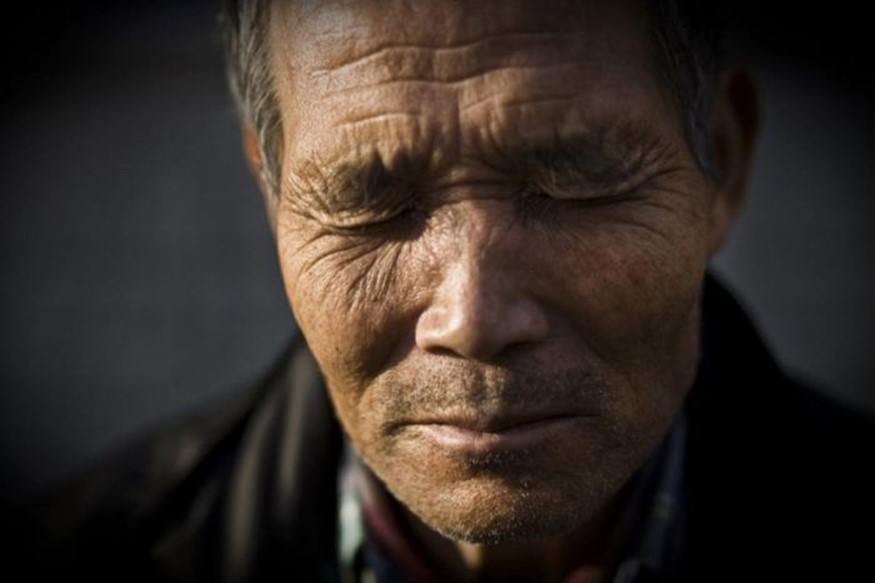
Japan has had two lost decades – years where the country’s economic growth has failed to impress – and continues to deal with a weak economy. Martin Fackler looked at one reason why:

  • The value of the yen compared to other currencies is extremely high. And the government is doing little to reduce its value.
  • A high yen is good for Japan’s retirees – who make up almost a third of the population – since it allows them to buy cheap imports from abroad.
  • It’s bad for the young. Local businesses are unable to sell products to other markets, because the high value of the currency makes their products more expensive.
  • This inter-generational inequality is not widely known or understood in Japan.
  • Since the elderly make up such a large proportion of Japan’s population, and because they come out to vote in large numbers, it is difficult to propose policy measures that would bring down the value of the Yen.
  • In the long run though as Japan’s domestic industry continues to wither even the elderly will suffer.

To read more including why the Bank of Japan isn’t acting, how other countries have responded to the same issue, some of the strategies that Japan could pursue, what this means for Japan’s future, the actions that the government has taken, an initiative by the Democratic Party to solve the problem, what experts have to say, and what the elderly have to say, click here.

Source: Financial Chronicle

Via: Marginal Revolution

Escaping Indonesian Traffic

August 7, 2012 in Daily Bulletin

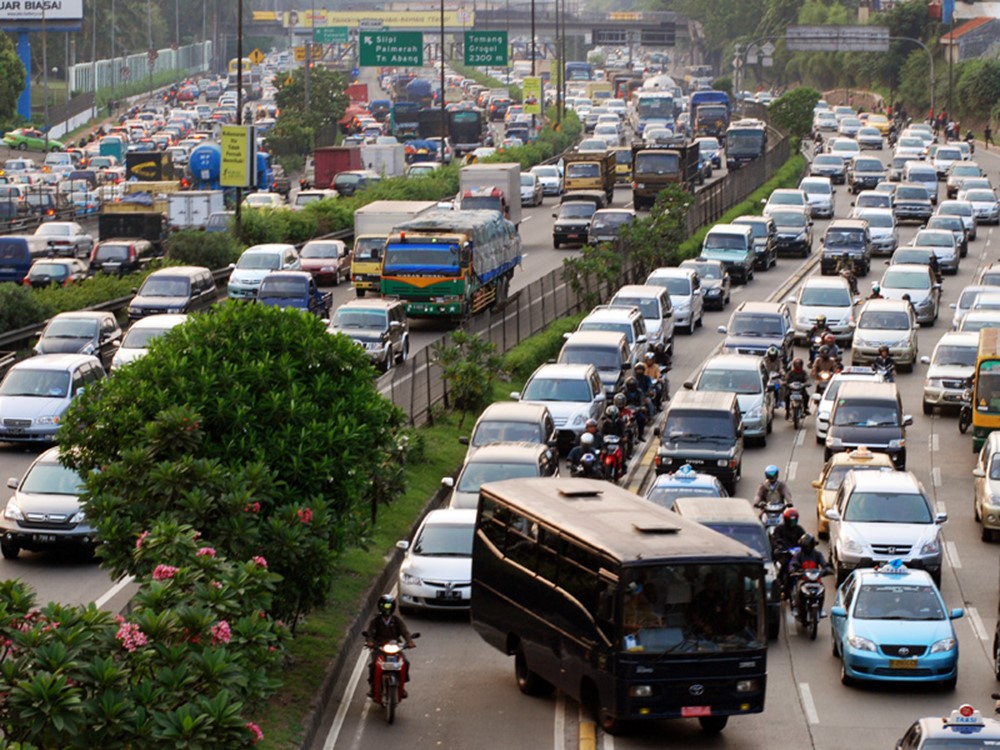
Sandy Hausman reports on a creative way that Indonesians have found to get around new traffic control rules:

  • Projections suggest that by 2014 traffic will become so bad in Jakarta that there will be a total girdlock.
  • To deal with this lawmakers set up special lanes which only cars with three or more people can drive on during rush hour.
  • This has led to groups of people raising their index finger at the entry to these zones, offering to sit in the car to make up the numbers.
  • Such passengers can make anywhere between $1 and $2.35 per trip.
  • Not only do they earn money, but the people who can afford to pay have nice cars in which they can enjoy the air conditioning and the radio. It’s also an opportunity to explore the city.
  • The practice is illegal although it has become so successful that lawmakers are considering creating a toll road with the proceeds being used to finance a public transit system.

To read more including details about the future of traffic congestion in Jakarta, what happens to those who get caught, why mothers have an advantage, the safety of the practice, how long some commutes can be without the lane, the stalled mass transit system, and what providers and users of the service have to say, click here.

Source: The World

Via: Marginal Revolution

Why Is The Military Trying To Cure Breast Cancer?

August 6, 2012 in Daily Bulletin, Signature

John Norris had a simple question: of all the various agencies in the United States, why is the military given billions of dollars to research breast cancer? The answer is fascinating:

  • Even though the United States spends more on defense than China, Britain, France, Japan, Russia, Saudi Arabia, Germany, India, and Brazil combined, law makers are loathe to cut the Pentagon’s budget.
  • Most other agencies get punished if they do badly. The military is the one institution that receives more money if things go bad.
  • Thus lawmakers can give funding for projects to the military, and be confident that the funding won’t get cut in the future .
  • This explains why the military has funds for researching breast cancer and encouraging the arts.
  • The military then gives the funds to the very same agencies that should have received the funding in the first place – since they have the expertise.
  • The Pentagon has also began to see economics as a military tool causing it to request money for, and expand into, traditionally non-military fields.
  • However there is substantial risk in making the military an inefficient giant bureaucratic organization that allocates money for things that do nothing to protect national security.

To read more about the Pentagon’s untouchable budget, how the concerns about “mission creep” have disappeared, how this ties into the F-35, how this figures into the 2012 Presidential political calculations, military expansion in a time of unwinding wars, the Senator who worked to give Breast Cancer funds to the Pentagon, what “expeditionary economics” are, and the long term risks all of this entails, click here.

Source: Foreign Policy

The History Of Toilet Paper

August 6, 2012 in Daily Bulletin

Michael Sacasas took a look at the history of toilet paper:

  • Toilet paper was used in China by the 1300s.
  • In other places people would make use of what was around such as leaves.
  • Until the end of the 1800s Americans used discarded reading material.
  • The Farmer’s Almanac came with a hole punched in it so that it could be hung up and have its pages torn off with ease.
  • It is unclear if this is why Americans today still take reading material to the bathroom.
  • Toilet paper first appeared in 1857 but it wasn’t declared “splinter-free” until 1935.
  • Two-ply paper appeared in 1942.
  • There was a toilet paper shortage in 1973.

To read more about toilet paper that would give you splinters, why there was ever a toilet paper shortage, what this says about innovation and technology, how we have come to take certain things for granted, how this relates to Seinfield, what the Romans did for us, and other interesting details, click here.

Source: The Frailest Thing

Via: Marginal Revolution

The Future Of Food

August 5, 2012 in Daily Bulletin

We’ve previously looked at the future of food. The BBC also got in on the act and contacted experts that suggested ways our diet may develop:

  • Lab-grown meat. The world’s first test-tube burger might be ready by the end of the year.
  • Algae. It can be grown in the ocean which is appealing since we’re running short on both land and fresh water. It is also a healthy replacement for salt.
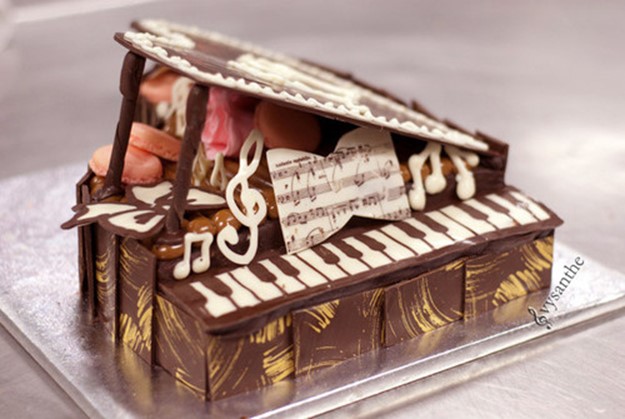
  • Sonic-enhanced food. We all know that sight, taste, and texture affect how we taste our food. But it turns out sound does as well. Piano music makes things taste sweeter. The research is in its infancy but in the future you could use soundtracks to alter the taste of what you eat.

To read more including how our notion of food has changed over the years, why Timon and Pumba might have been onto something, what sounds make your food taste bitter, NASA’s involvement in all this, how these ideas might affect the environment, the different types of algae available, and how some of these things might infiltrate our diet without us realizing, click here.

Source: BBC

A Bank Run For Children (By Children)

August 5, 2012 in Daily Bulletin

Would the financial crisis have happened if kids were in charge of our banking system? Well if The Children’s Development Khazana continues to grow we might eventually find out. France24 reported on a bank run for and by kids:

  • The first branch opened in New Delhi in 2001. Now there are 12 in the capital of India, and another 300 in locations as far as Nepal, Bangladesh, Afghanistan, Sri Lanka and Kyrgyzstan.
  • The banks are run for street children so that they have a place to put their money where they can be confident that it won’t be stolen. This encourages them to save and invest.
  • The ‘branches’ are located in children’s shelters.
  • Every six months account holders elect two child managers for each branch.
  • To qualify for an account, children can’t make money from begging or drugs.
  • Savings with the bank earn 5%.
  • The only time an adult is involved is when the money is deposited in a nationalized bank at the end of the day.

To read more including the legality of child labour in India, the people who started the bank, what one 14-year-old manager has to say about those who put money in the bank, the stories of children who use the bank, what they plan to do with their savings, the number of clients a bank may serve, what the branches look like, and how it helps children build a stake in their own future, click here.

Source: France24

Via: Kottke

The Economics Of Human Hair

August 4, 2012 in Daily Bulletin

In a story that brings together mysticism, the Russian Mafia, Paris Hilton, and Will Smith, Jean Lasker Gottlieb took a look at the human hair market:

  • In 2011 $1.3 million worth of human hair entered the United States.
  • It has become so valuable that in 2011 thieves stole $230,000 worth of it from salons – while ignoring the flat-screen televisions and cash registers.
  • The most valuable hair is virgin hair – never coloured, cut, or processed.
  • The hair is used to fashion authentic looking wigs. Hollywood is a big buyer. Film wigs have to be durable and high quality and can cost as much as $6,000.
  • Paris Hilton was charged $6,000 for her first wig, but after she lost it within a year, the price went up to $10,000.
  • Cornrow wigs are the most difficult to make and it can take three people six days to make one.
  • After the collapse of the Soviet Union entrepreneurs went to Russia believing that the people were poor enough to want to exchange their hair for cash. But the Mafia eventually saw how lucrative the market was and wanted a 20% cut.
  • Instead people turned to India where it is tradition for women to grow their hair long. In 2011 66% of imported human hair came from India.
  • At Tirumala Venkateswara 20 million pilgrims a year visit for good luck. Some have their hair shaved, and the Tirumala administration collects it and auctions it. At one of these auctions they made $27 million.
  • But cultural practices are changing in India and people are looking to other countries to renew their supply of human hair. There are few candidates. In Ukraine bunkers full of human hair have to be protected by armed guards.

The entire two page article is fascinating and takes a look at many things including what hair means to us as a society, what it’s like to lose it, the future of the industry, the wigs worn by Will Smith and Samuel L. Jackson, the most valuable colour of hair, what the hair looks like when it arrives in boxes, other sources of human hair in India, what Paris Hilton named her wig, how the quality of hair changes as it ages, the importance of being able to tie a knot, the violent thieves that steal hair, and why human hair is like an endangered species. You can find it here.

Source: The Atlantic

Via: Marginal Revolution

Japan And The Fax Machine

August 4, 2012 in Daily Bulletin

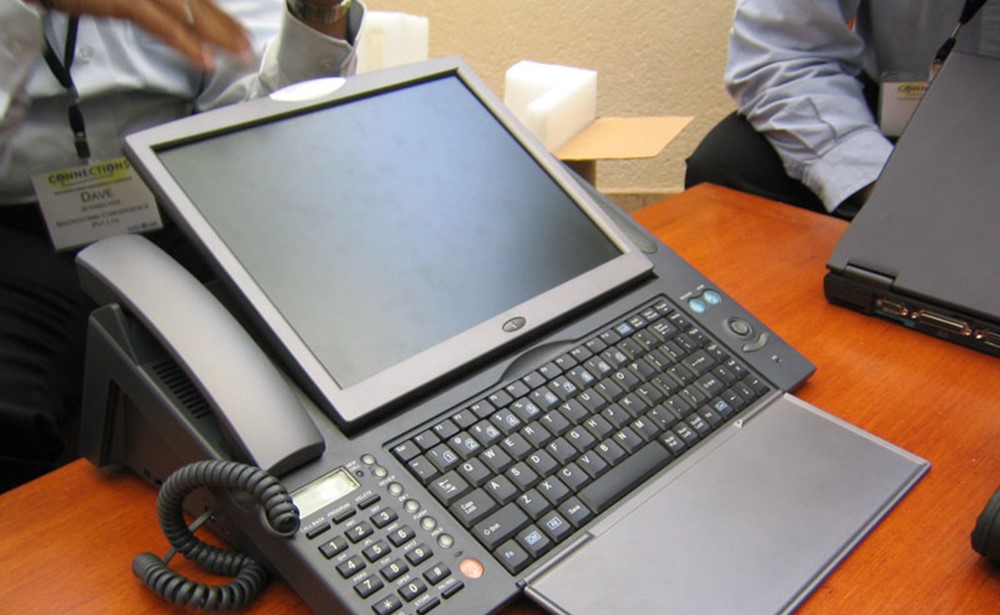
Japan is generally thought of as a high-tech country on the cutting edge of robotics and gadgets. Yet fax machines – a throwback to a previous era in most other countries – are surprisingly popular there writes Mariko Oi:

  • 87.5% of surveyed Japanese businessmen say that “a fax machine is a crucial business tool.”
  • It is considered by many to be rude to send letters and notes that aren’t hand written. Resumes must be hand-written so that employers can judge hand-writing. Calligraphy classes are popular.
  • Part of the reason is that in Japan hard copies of documents are important.
  • The most important documents require seals, not signatures. The majority of the Japanese have their own personal seal registered with the government. These are easily faxed.
  • But the main reason for the popularity of fax machines is that more than 20% of the population is over 65 and have trouble adapting to new technology.
  • One supermarket started allowing orders by fax machine, after its internet ordering system was met with indifference.
  • Because so many of their customers are old, the same supermarket calls up to check on them if they haven’t ordered in a while.

To read more about what Japanese fax machines look like, why hard copies of documents are so important, etiquette in Japan, the two types of Japanese consumers, the proportion of Japanese households that have a fax machine, the rise of internet faxing, and quotes from the Japanese about the importance of fax machines, click here.

Source: BBC