When Did Sodas Become So Large?

September 17, 2012 in Daily Bulletin
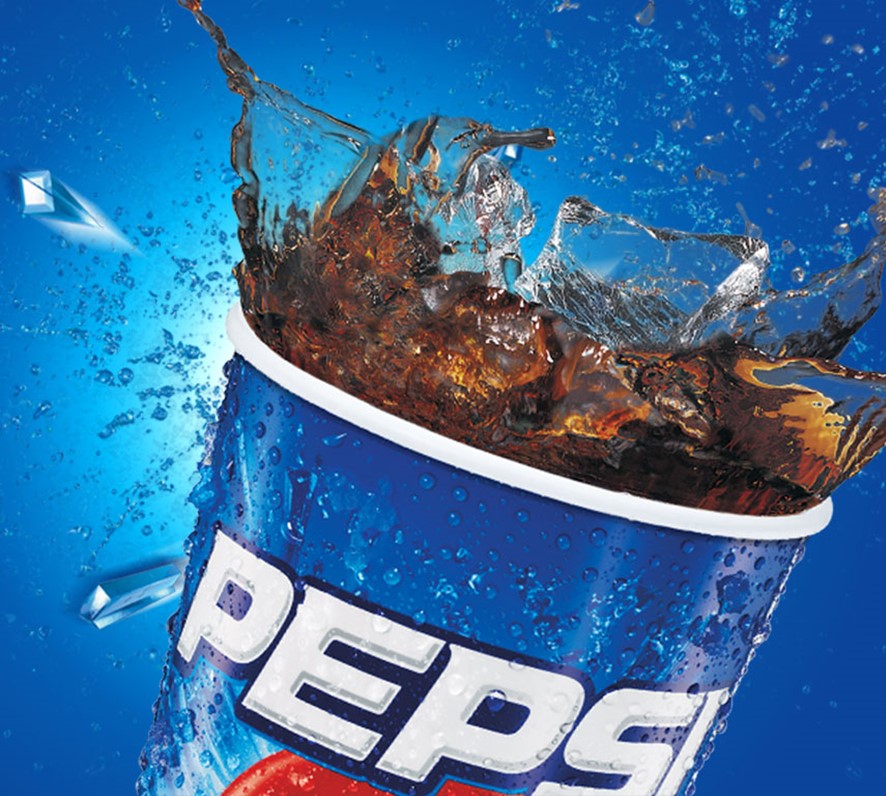
New York City has gone through with a controversial policy to ban the sale of soft drinks in cups larger than 16 ounces (about half a liter.) Brian Palmer looked at when soda servings got so big:

  • During the great depression an upstart Cola company called Pepsi-Cola began to sell 12-ounce bottles for a nickel. This was twice the amount of cola that Coke sold for a nickel.
  • In addition to making it a more attractive value proposition for consumers, this also meant that Pepsi could use the same bottles as beer makers, cutting costs.
  • Pepsi gained so much market share that it looked like Coke would lose its dominant market position. Coke soon released a “Family Size” 21 ounce bottle.
  • When Coca-Cola first worked with McDonald’s the original fountain soda had seven ounces. It hit 21 ounces in 1974.

Read more about the racial undertones behind the serving sizes, and an infographic that depicts the evolution of the soda container over here.

Source: Slate

Should Charities Act Like Corporations?

September 16, 2012 in Daily Bulletin

Dan Pallotta argued that charities should be run like businesses: pay executives high salaries, advertize to build market share, and even float on the stock market. Perhaps then we could build orphanages on the scale that we build McDonald’s. Highlights of the argument include:

  • We have an emotional reaction to charities that use money to pay their employees high salaries rather than help the poor, but that means that the best and brightest don’t go to work for charities, and this ultimately hurts the poor.
  • If you’re rational then you should continue to spend money on advertizing as long as the money you get from contributions as a direct result of advertizing is more than the money you spent. Yet we don’t like our charities using their donations to advertize, and as advertizements from other businesses continue, charities won’t be able to steal market share from the private sector – because they can’t advertize.
  • Accept failure. Not every business initiative succeeds, and not every charity event will raise as much money as expected. Charities must take risks.
  • Give them time. Startups go for years just building their capacity without generating profits. Charities might not generate donations immediately. Give it time, it’s an investment.
  • Offer dividends through a stock market to attract more capital.

Read more about the money we would have to raise to fight poverty, how we can enable this change, how we would measure performance, and how this all relates to the first settlers in the New World over here.

Source: The Wall Street Journal

The Highest Graveyard In The World

September 16, 2012 in Daily Bulletin

Every year as individuals climb Mount Everest they pass by the bodies of those who recently perished attempting the same journey. Grayson Schaffer gave insights about the world’s highest graveyard:

  • In Mount Everest’s 2012 spring season, ten people died, making it the third deadliest spring for Everest.
  • Deaths have continued because companies have sprung up that are willing to offer to take anybody to the top of Everest – as long as they’re willing to pay the fees – even if they have absolutely no experience climbing mountains.
  • Some of these companies have realized that instead of employing foreigners as guides they can simply employ local Sherpas. These people live in Nepal and don’t require permits to climb – saving tens of thousands of dollars.
  • Yet not only are the Sherpas often not qualified to guide; there is also often a culture clash. A good guide needs to be willing to take charge and tell people if they need to turn back. Westerners are good at this while Sherpas are more deferential, being in the habit of listening to the client, especially after the client has paid thousands of dollars to be on the climb.
  • While the Nepalese government should mandate that only experienced climbers can receive a permit, the profits that come in are too lucrative for them to act.
  • Sophisticated weather forecasting techniques now tell climbers when the weather will be good, making it safe to climb. This has introduced its own hazards as people all try to climb at the same time, creating long lines on the mountain.
  • There is a strong blogging culture at the base camp where bloggers might report the death of a climber even before the families find out.

The entire article is fascinating and goes over the stories of people who’ve been forced to walk past as other climbers perish, and some of the foolhardy decisions that people have made. You can find it here.

Source: Outside

Whatever Happened To India?

September 15, 2012 in Daily Bulletin

India’s growth rate has dropped from 8.1% a year between 2004 and 2011 to around 5.5% so far this year. What happened? Peter Passell answered:

  • India had a short burst of reforms during crisis in the 90s, but since then interest groups in the democracy have blocked the progress of reforms.
  • India’s labour laws make it almost impossible to fire a worker once they are hired. Businesses are sending operations to countries where they don’t have to deal with this problem.
  • India has four times the population of the United States but only one third the land mass. There isn’t enough space to build things like factories.
  • India’s infrastructure is under developed. Roads are congested and power cuts are frequent.

Passell explores many more issues including how growth affected income inequality and what the country’s future holds for it. Find the article over here.

Source: Foreign Policy

The Most Significant Inventions In The History Of Food And Drink

September 15, 2012 in Daily Bulletin

Megan Garber writes that the UK’s national science academy released a list of the 20 most significant inventions in the history of food and drink. Highlights include:

  • Ovens. They were first used in 29,000 BC. To cook mammoths.
  • Alcohol is important to the British. Three of the items – fermentation, corks, and the barrel – were on the list in part due to their contribution to the production and sale of alcohol.
  • Selective breeding. It allowed us to naturally genetically engineer crops and animals to better fit our requirements.
  • Refrigeration. The number one invention on the list. It allowed us to preserve food, nutrition and…beer.

Read the entire list here, and find out where the spork stands.

Source: The Atlantic

Why Our Television Habits Don’t Make Sense

September 14, 2012 in Daily Bulletin

The Economist looked at how irrational our television watching habits can be:

  • Changing the channel at the end of a show requires minimal effort – all you have to do is press a button.
  • Yet according to one study if you’re watching a channel then you’re likely to stay on that channel, even after the show you like ends, and there are better alternatives available.
  • TV executives seem to know this. England’s public broadcaster, the BBC would air light and entertaining programs before some of its heavier cultural pieces to force culture on the British.
  • Some potential explanations for this behaviour include:
    • Channels advertize their own shows on their own network. So if you sit to watch one program you’re lured into watching more.
    • There are now so many channels that it’s difficult to choose which one to switch to. So viewers just stay on the channel that they’re on.
    • Procrastination: the same reason we never really cancel our gym memberships.

Read more about the methodology of the study, what this would mean for Berlusconi and other Italian media barons, and how Rupert Murdoch feels about it over here.

Source: The Economist

Why China Doesn’t Have A Wall Street

September 14, 2012 in Daily Bulletin, Signature

Since 1992 China’s economy has grown by 1,700%, yet its stock market has declined by 40%. What gives? Carl Walter and Fraser Howie found out:

  • It’s because of the way the stock market is set up. Only state-run companies are allowed on the market, and the Chinese government must have at least 51% ownership of the company.
  • When a Chinese company first sells shares on the market, the Chinese government sets the share price, and then forces other state sponsored enterprises to buy shares at that price – guaranteeing a successful sale.
  • If Steve Jobs were to start a company in China its valuation would not be driven by how visionary his ideas were, rather, it would depend entirely on his relationship with the Chinese government.
  • While the Chinese government could change the way it does things, it won’t, because that would require the introduction of private property and the Communist Party of China would rather that everything just belong to them.

Read more about the largest IPO in history, the veneer of a modern economy, and more over here.

Source: Foreign Policy

What Happens To Apple If The iPhone Fails?

September 13, 2012 in Daily Bulletin, Signature

Yesterday Apple previewed the latest model of the iPhone. The company has grown by leaps and bounds in recent years, so even if the iPhone 5 ends up disappointing consumers it shouldn’t be too big a deal for Apple right? Not so argues Henry Blodget. Apple’s future depends on the iPhone doing well:

  • Apple’s legal battles with Samsung forced the company to release detailed financials. They showed that Apple depends on the iPhone for almost 66% of its profits.
  • The iPad generates about another 15% of the company’s profits.
  • Tim Cook talked up the post-pc era, but Apple better hope that this future isn’t driven by iPads. The cost of making the device is so high and its price is so low that if the iPad became Apple’s dominant product, its profit margins would be crushed.
  • All of this means that if the iPhone fails then Apple’s financials will take a steep dive. The company’s future is entirely dependent upon the success of this one product.

Read more about these estimates, what experts have to say, and a fascinating graph that visualizes the profits from Apple’s different products over here.

Source: Business Insider

Are Americans Less Stylish Than Europeans?

September 13, 2012 in Daily Bulletin

Bob Unwin argues that Americans are less stylish than Europeans in…everything. From clothing to architecture. He suggests that it’s because:

  • Due to its sheer size, there is a greater average distance for a given American from a major cultural center.
  • Class distinctions are less important and there is more internal diversity in the US. There is no need to differentiate yourself through fashion.
  • Americans have a more informal culture and this is reflected in their style.

Read the full argument here.

Source: Marginal Revolution

Pet Funerals

September 12, 2012 in Daily Bulletin, Signature

We’ve seen restaurants with menus designed specifically for pets. It turns out that there are crematoriums and other such services that operate on largely the same principles. Eric Spitznagel wrote:

  • The pet after-care industry has grown tremendously – some report growth rates of hundreds and thousands of percent annually. In 2011 it was worth $52.87 billion.
  • Some of the services offered include $1,765 bronze grave markers and $1,135 velvet lined caskets. You can also get your pet freeze dried, embalmed, or have a diamond made of their remains.
  • According to one service provider, families are quite likely to complain about the cost of burying/cremating their human relatives. They never complain about the cost of after care services for their pets.
  • Some suggest it is because baby boomers find their only source of companionship in their pets after their children leave home or their spouses pass away. But young people are just as likely to use these services.

Read more including some of the other options offered, and why people from Ohio will bury their dogs in Pennsylvania, but not their relatives, over here.

Source: Business Week